MAH FIRST CONTACT — DIRECTIONAL PASSING
Pass with control. Give your setter options.
The ball won’t always come straight to you. Coach Chris teaches you to read side and depth, move to short, lateral and deep balls, and develop the passing angle as you travel—so first contact has a destination, not just height.
3 video lessons · 17-page Athlete Guide · Court-practice tools
Self-guided. No subscription.
Partner practice with a net. Lesson 3 also needs a separate target player.
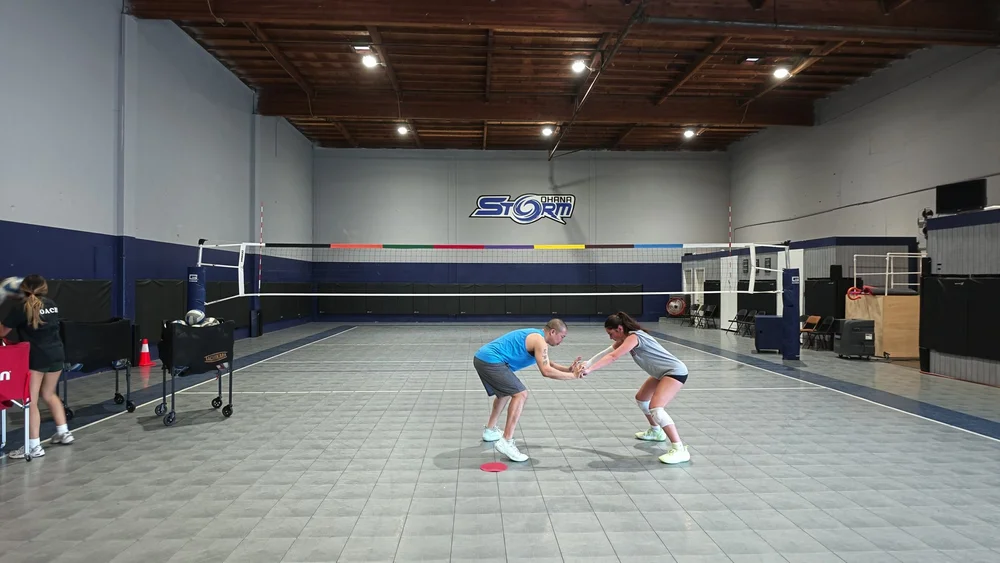
17-PAGE ATHLETE GUIDE
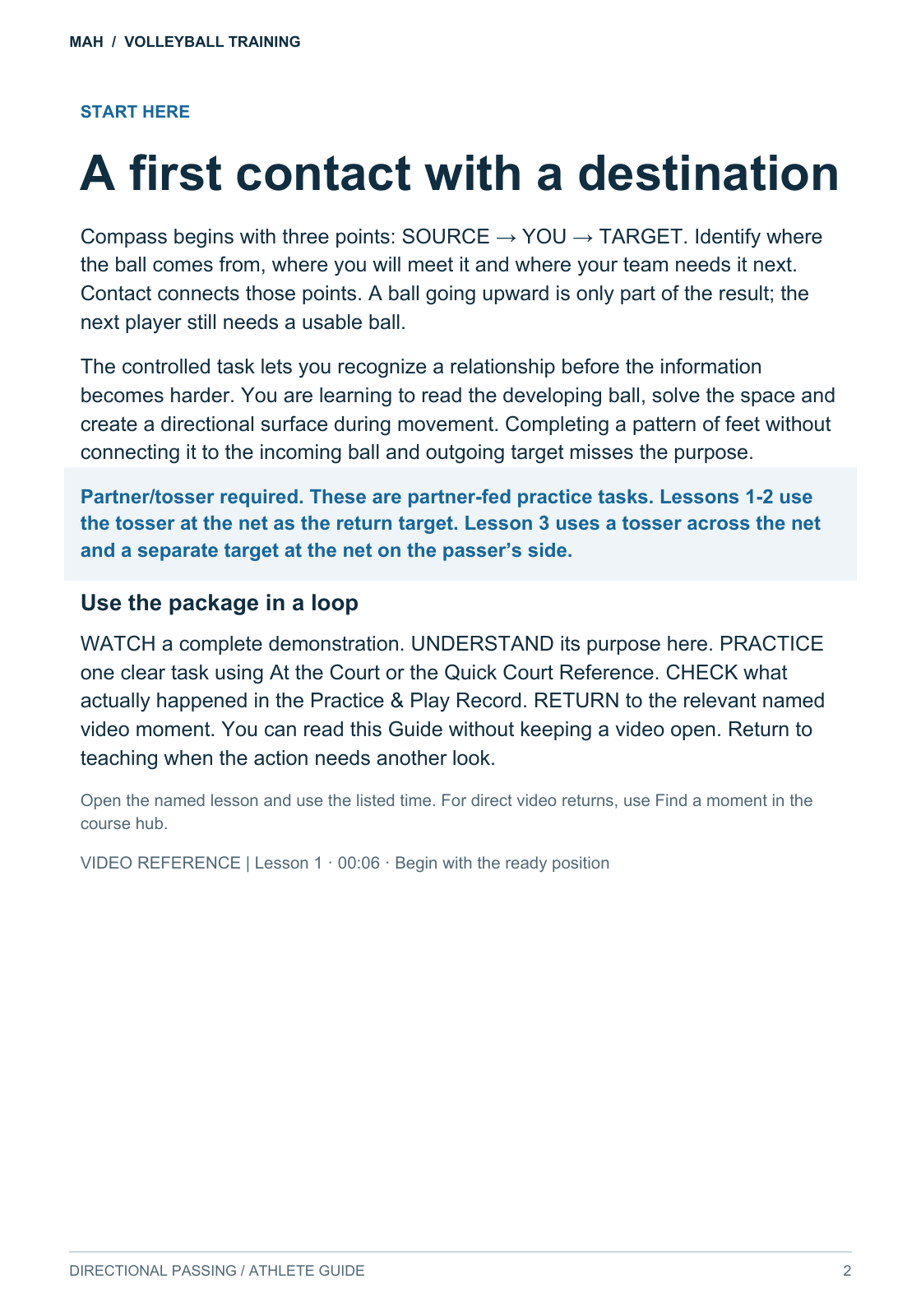
Understand the pass.
Not just the drill.
The movement, the angle and the reason behind the rep.
Read a Guide sample01 / THE TEACHING
Short. Lateral. Deep. Control the redirect.
A shank, overpass or off-target ball can take away the attack before it starts. Reaching the ball is not enough; the platform still has to send it somewhere useful.
In this Compass example, the working side is known but the contact point changes. Hear Chris connect the read, movement and passing angle to the target. Then see the demonstration and reps with that purpose in mind.
COMPASS PASSING · COACHING EXAMPLE · 2:07
02 / THE COMPLETE PACKAGE
Know what to train. Take it to court.
A useful passing session needs more than a drill to copy. Get the explanation, the partner setup and a way to check what your pass actually created.
WATCH
3 Coach Chris video lessons
Follow the explanations and demonstrations that connect your starting position, movement and platform to the outgoing pass.
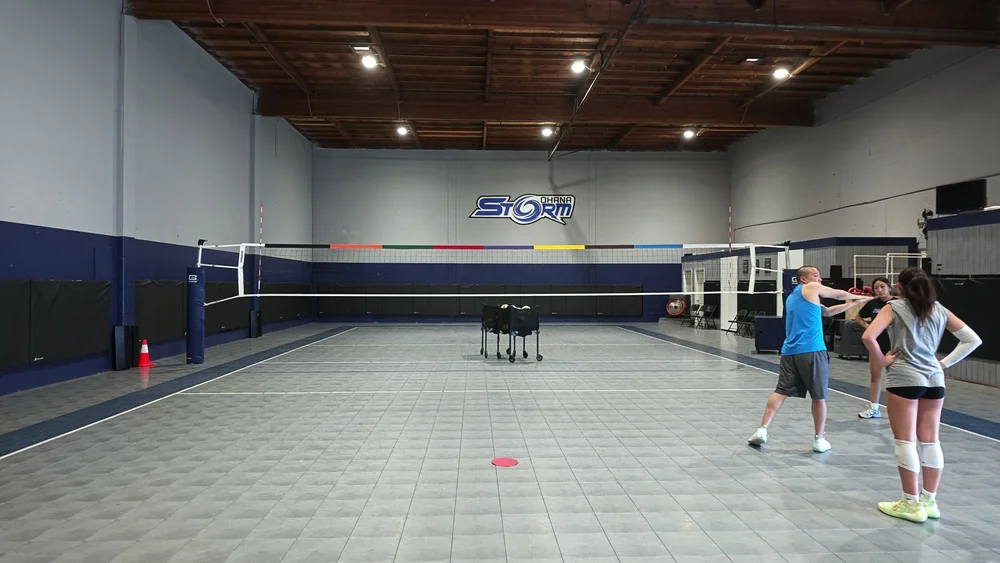
UNDERSTAND
17-page Athlete Guide
Revisit the details behind short-V movement, lateral and deep contact, target awareness and changing placement—without searching through a video for every explanation.
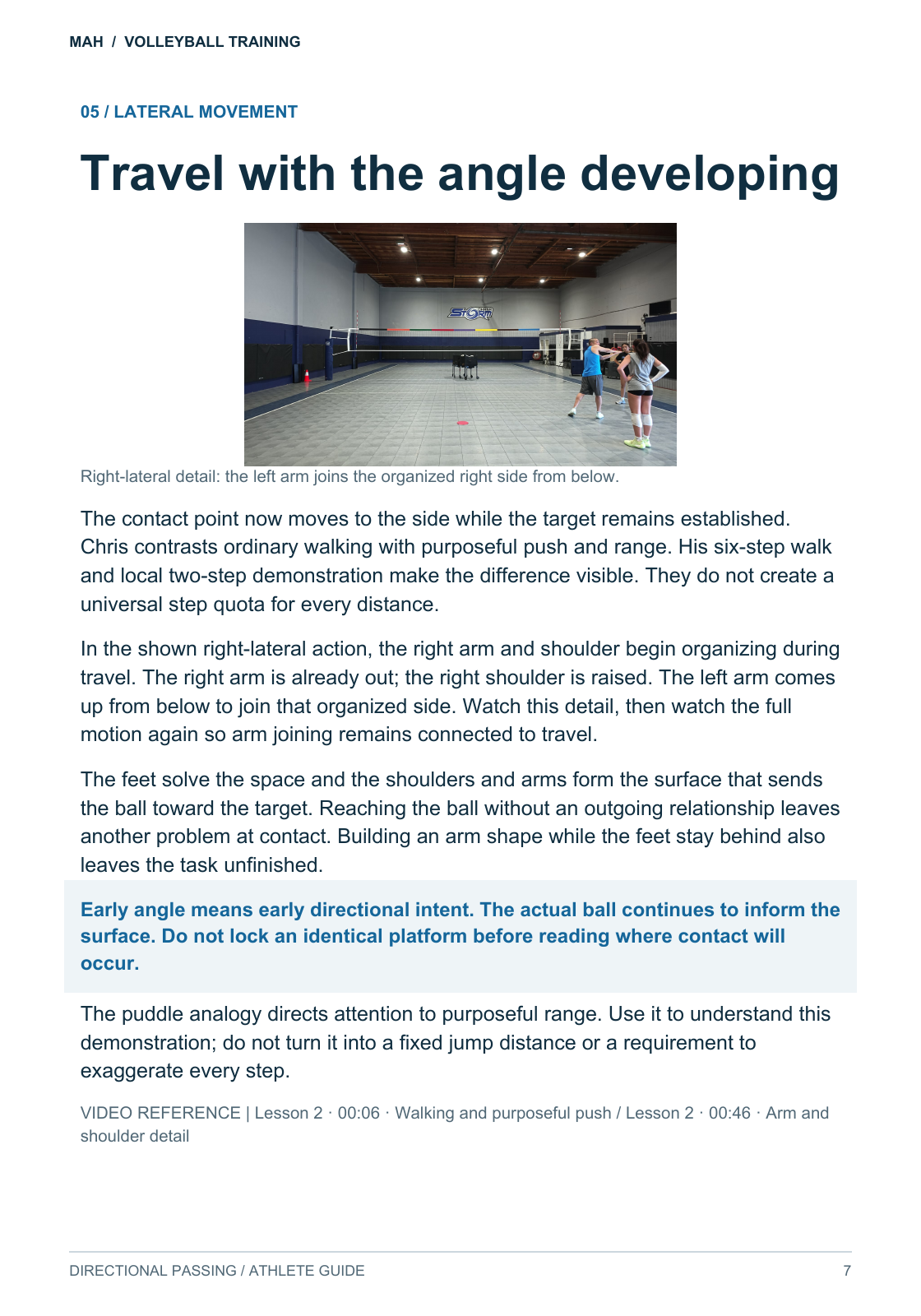
Excerpt
“The feet solve the space and the shoulders and arms form the surface that sends the ball toward the target.”
“Early angle means early directional intent. The actual ball continues to inform the surface. Do not lock an identical platform before reading where contact will occur.”
Read “A first contact with a destination”
PRACTICE
At the Court + Quick Court Reference
Set the feed, target and working side. Bring the cues and partner roles into practice without replaying a whole lesson between reps.
CHECK
Training Notes
Save a quick note from practice and keep it connected to the video moment you want to revisit.
Training Notes save your lesson-specific notes in this browser; download or print a copy to keep them elsewhere. The separate blank Practice & Play Record is a printable/offline worksheet.
RETURN
Find a Moment
Find the explanation you need—starting position, movement or contact—and go straight back to it. Captions and transcripts support the lessons.
Self-guided. No subscription. Partner practice required.
03 / THE PROGRESSION
Build the foundation. Then change the problem.
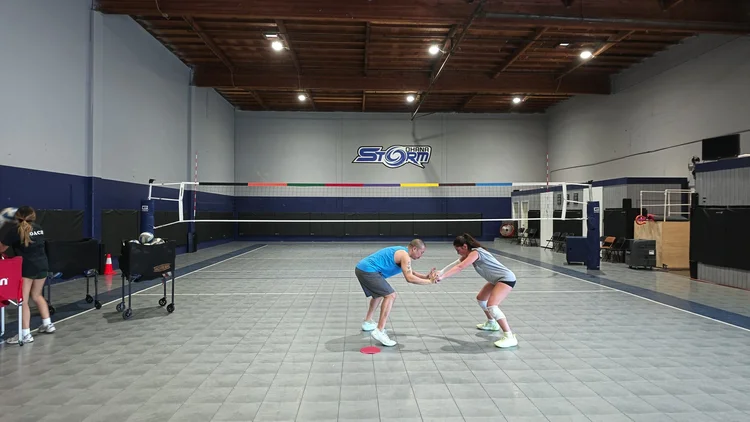
LESSON 01
Ready Position & Short-Ball V
Start balanced and ready to leave. Connect the split to the ball-side first step, then move on a V toward a short ball while preparing the pass back to target.
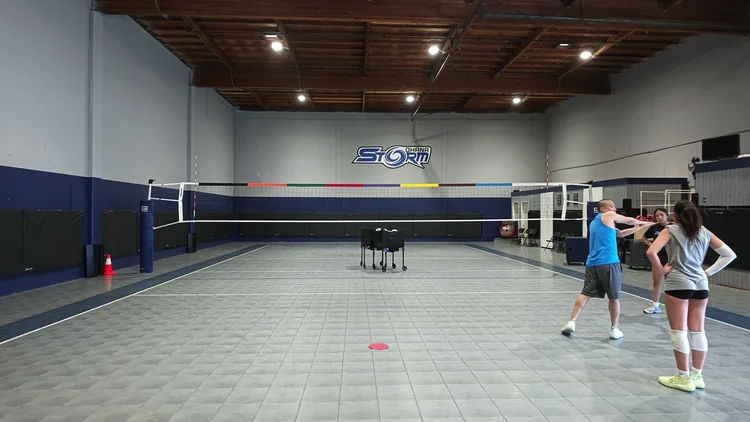
LESSON 02
Lateral & Deep
Solve the space beside and behind you. Learn how purposeful travel and a developing platform work together, instead of reaching the ball and trying to create the angle at the last moment.
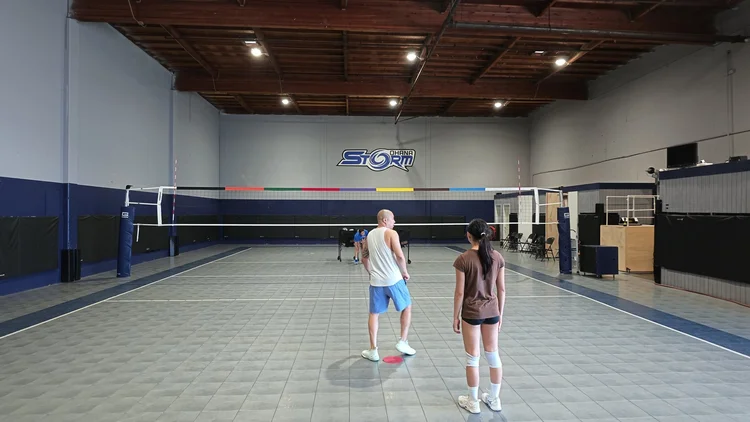
LESSON 03
Known Side, Changing Contact
Know which side you are working, but not exactly where the next ball will arrive. Adjust to short, lateral, deep and diagonal feeds within that side while keeping the passing target.
SOURCE → YOU → TARGET
Read the incoming ball. Meet it with control. Create a usable next contact.
04 / FROM LEARNING TO COURT
High-level principles. Scaled to your game.
The ball, your contact and the target still have to connect—whether you play school, club or recreational volleyball. Start with a feed you can control, then change the speed, distance and placement as the relationship becomes more repeatable.
Build your passing foundation or sharpen it. You do not need to be a libero to work on first contact.
What practice requires
A volleyball, suitable court space and the demonstrated net setup.
Lessons 1–2 use two people: a passer and a tosser who also receives the pass. Lesson 3 uses three: the passer, a tosser across the net and a separate target on the passer’s side.
Your partner follows the feed and setup. Chris’s teaching supplies the technical reference.
Adjust the challenge—not the purpose.
Change feed speed, distance, movement range, placement and repetitions to suit the athlete. Keep the incoming ball, contact and target connected.
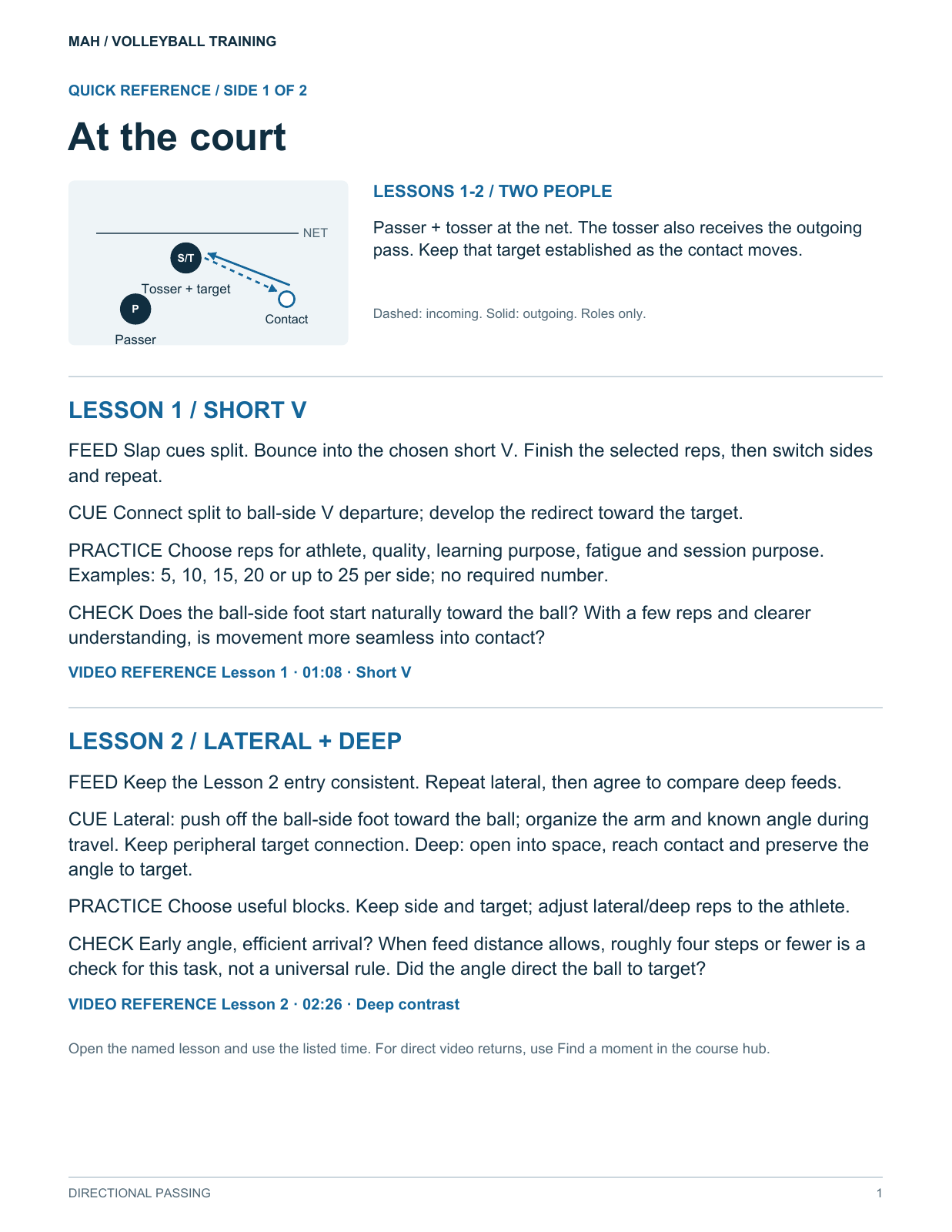
Dashed: incoming. Solid: outgoing. Roles only.
05 / YOUR COACH
A libero’s experience. A coach’s explanation.
Coach Chris · Former nationally No. 1-ranked collegiate libero
More than three decades inside volleyball.
Chris connects what you see before contact to what you can do with the ball. In Directional Passing, he explains the purpose of the movement, demonstrates the angle and brings the instruction back to the next player’s ball.
You hear not just which movement to use, but what it solves.

06 / THE DETAILS
Before you begin.
Who is Directional Passing for?
Players building their passing and players refining it—school, club or recreational. It is not limited to liberos or one age group. Use the demonstrated partner setup and adjust speed, distance and difficulty to the athlete.
Does this cover serve receive?
It builds reading, movement and target-control relationships that matter in first contact. The lessons use controlled, partner-fed Compass tasks; they do not cover every serve, defensive situation or team passing system.
Can I practice on my own?
No. Lessons 1–2 need a passer and a tosser who also receives the pass. Lesson 3 needs a third person as the separate target. You also need a volleyball, suitable court space and the demonstrated net setup.
Is individual coaching included?
No. This is self-guided instruction you practice with a partner. Individualized Film Review, Remote Coaching and Live Training are separate MAH offers and are not included.
What happens after I buy?
After purchase, log in to your MAH account and open Directional Passing. Use the Training Hub for lessons, Find a Moment, written support, practice and resources. Start with Lesson 1 unless you are revisiting another lesson. The Course keeps your lesson completion and progress.
How long do I have access and what can I download?
Your $39 purchase includes ongoing access to Directional Passing through your MAH account. There is no subscription and no scheduled expiration date. Lesson videos are streamed inside the protected training area. Resources are downloadable where a download option is provided.
What is the refund policy and where do I get support?
Because this is a digital training product with access delivered after purchase, purchases are final except where required by law or if MAH cannot provide the purchased access. If you have trouble accessing your purchase, contact MAH Volleyball Training for help.
MAH FIRST CONTACT — DIRECTIONAL PASSING
Train a pass your teammate can use.
Give your next passing session a clear purpose: meet changing balls under control and direct first contact toward your target.
3 Coach Chris video lessons · 17-page Athlete Guide · Court-practice tools
Self-guided. No subscription. Partner practice required.